What to do in the 9th arrondissement of Paris? Museums, theaters and covered passages
Hôtel Maxim Folies
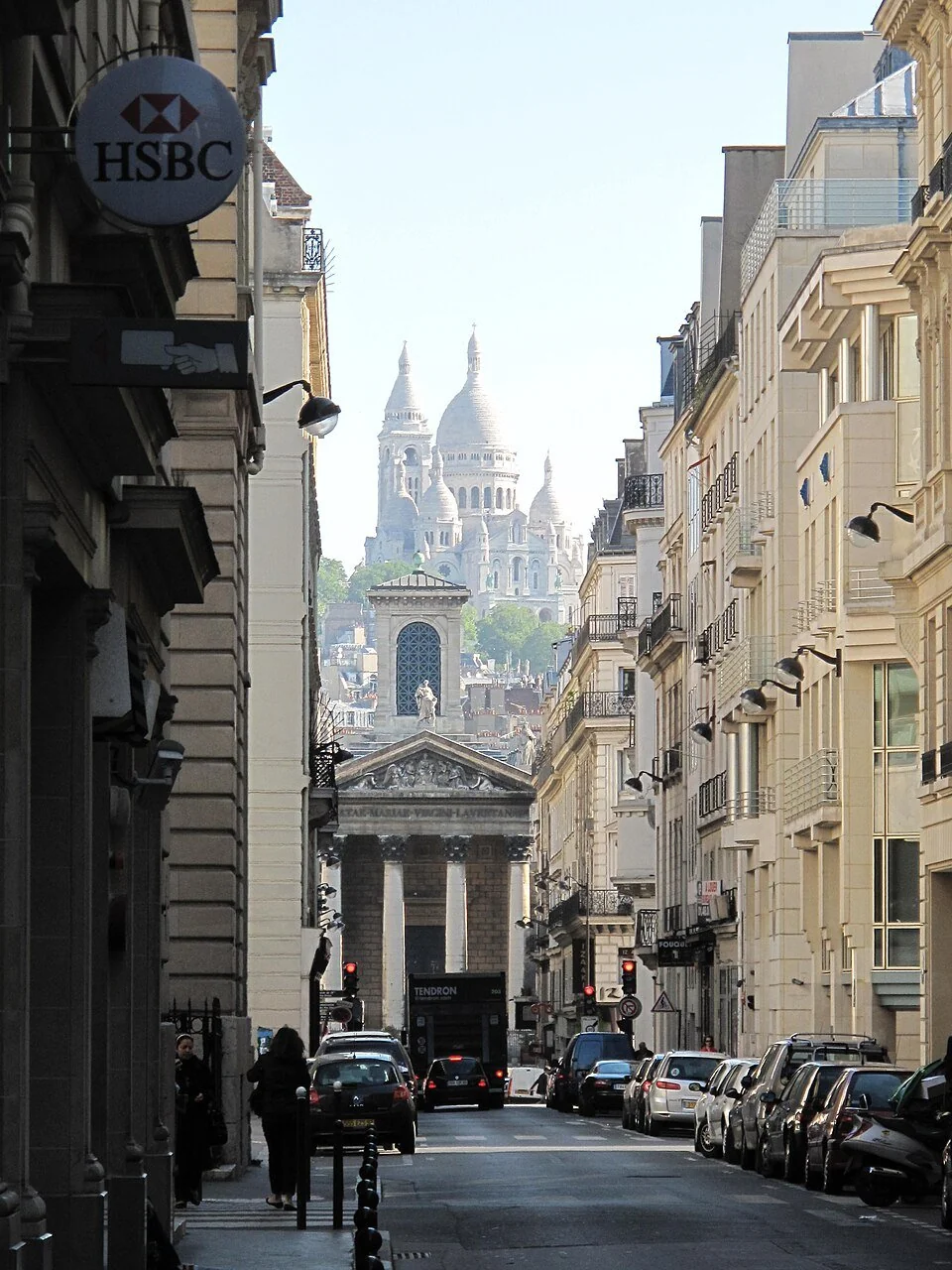
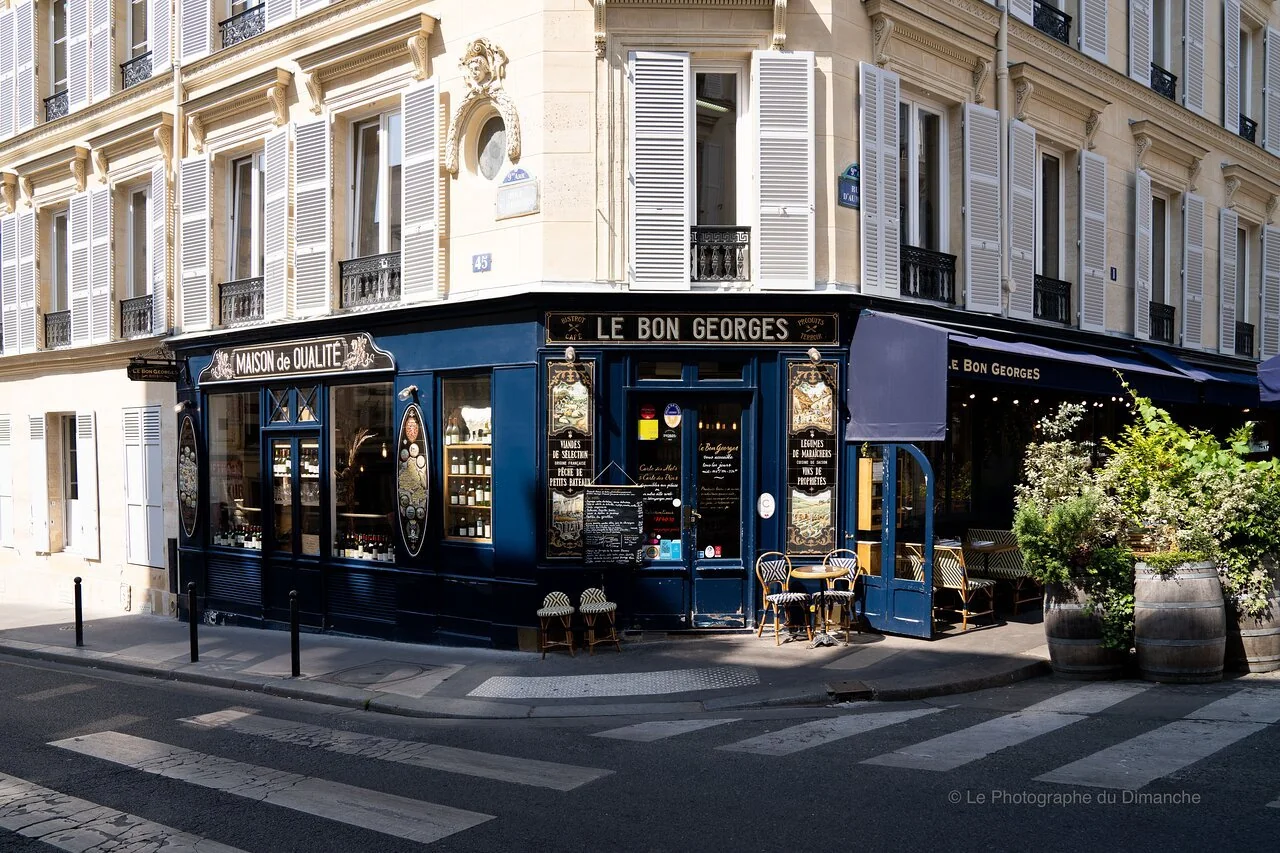
What to do in the 9th arrondissement of Paris? This district of the city of Paris packs famous landmarks, vibrant culture and rich history into a few streets: the Grands Boulevards and their theaters, the Palais Garnier opera house, the department stores of Boulevard Haussmann, Galeries Lafayette and Printemps, the Grévin wax museum and its historical figures. Walk north to Rue des Martyrs, Nouvelle Athènes and South Pigalle for local cafés, cheese shops, bakeries and boutiques, or into Passage Jouffroy and Passage Verdeau for the hidden passages of the 19th century.
Museums, art galleries, romantic squares, French food, shopping, a coffee shop break, a ballet, a late dinner: this guide lists the major landmarks, the secret places and the practical information for your trip to Paris. Steps from the Grands Boulevards metro, Hôtel Maxim Folies is a friendly 3-star Paris hotel in the heart of the neighborhood.
The 9th arrondissement of Paris, how to plan it
WHERE TO START
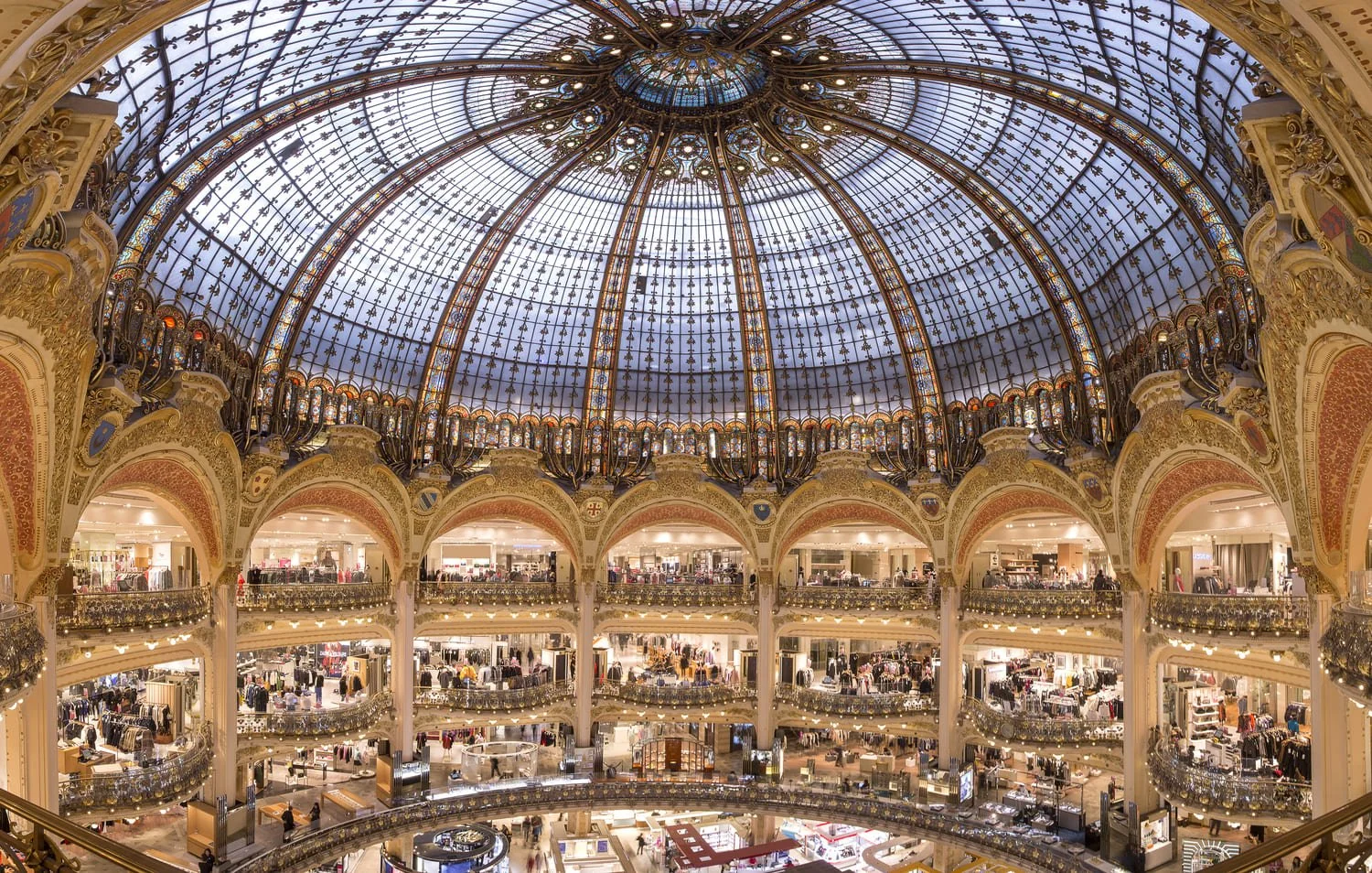
What to visit first? Three areas shape any trip through this arrondissement of Paris, each with its own landmarks, food and shopping. To the south, the Palais Garnier and its grand staircase, then the department stores of Boulevard Haussmann: the Galeries Lafayette glass dome, opened in 1912, and the fashion floors of Printemps. In the center, the Grands Boulevards line up performance venues, historic brasseries, the Musée Grévin and the covered passages. To the north, Rue des Martyrs and Pigalle keep a more intimate Paris of local shops, art galleries and artists' studios.
Allow one day for the essentials, two if you add a show and a morning of shopping. Everything is walkable, map in hand: from Rue Geoffroy-Marie, the Grévin wax museum is three minutes away, the Opéra Garnier a quarter of an hour on foot. Our recommendation: head out early for the covered passages, still quiet, then explore Rue des Martyrs before lunch. The atmosphere changes at night, when the theater signs light up and the terraces fill. Few parts of the city pack this much vibrant culture and rich history into twenty streets, and it is a perfect location for anyone who would rather walk than take the metro twice.
Shows, theaters and the Opéra Garnier
STAGES AND GRAND EVENINGS
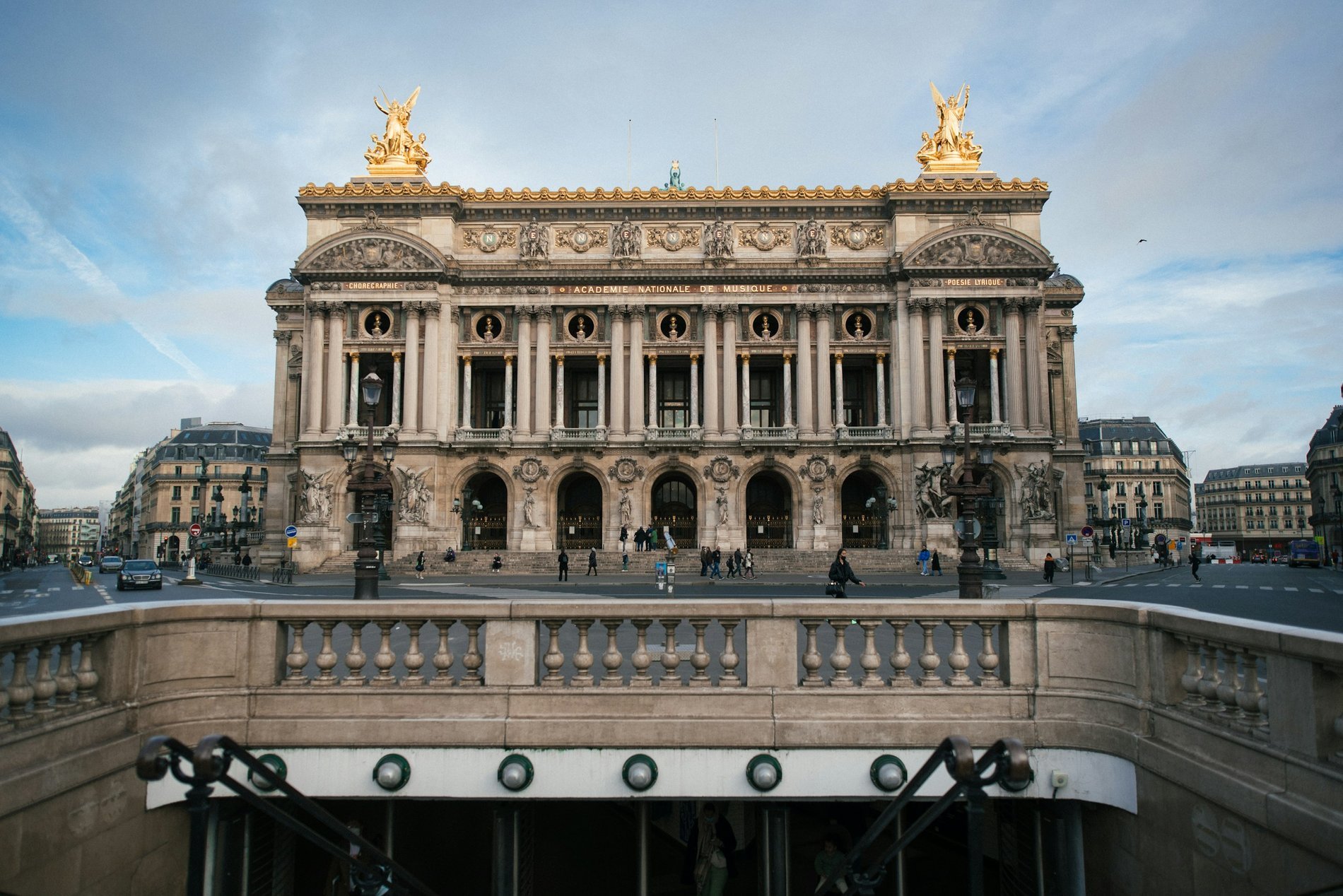
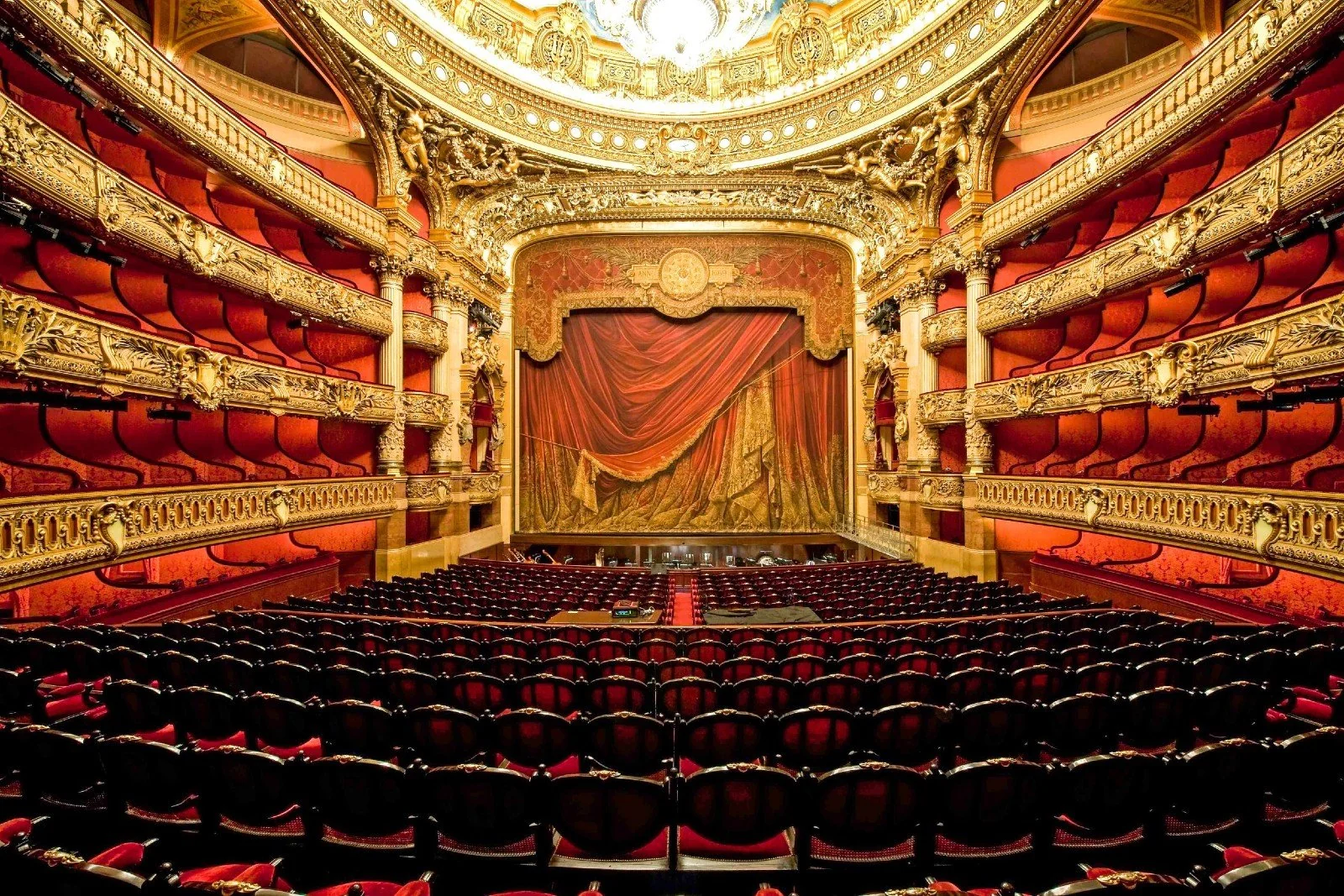
Paris's 9th arrondissement is the leading district in France for live performance. Immediate neighbors of Hôtel Maxim Folies, the Folies Bergères have kept the spirit of the Parisian revue alive since the 19th century. A little further on, the Palais Garnier raises its statue-covered façade, designed by the architect Charles Garnier under Napoleon III and opened in 1875. The Palais Garnier opera ranks among the most beautiful buildings in Paris and can be visited by day, freely or with a guide. Take in a ballet at the Palais Garnier and you see the Paris Opera at its most classic.
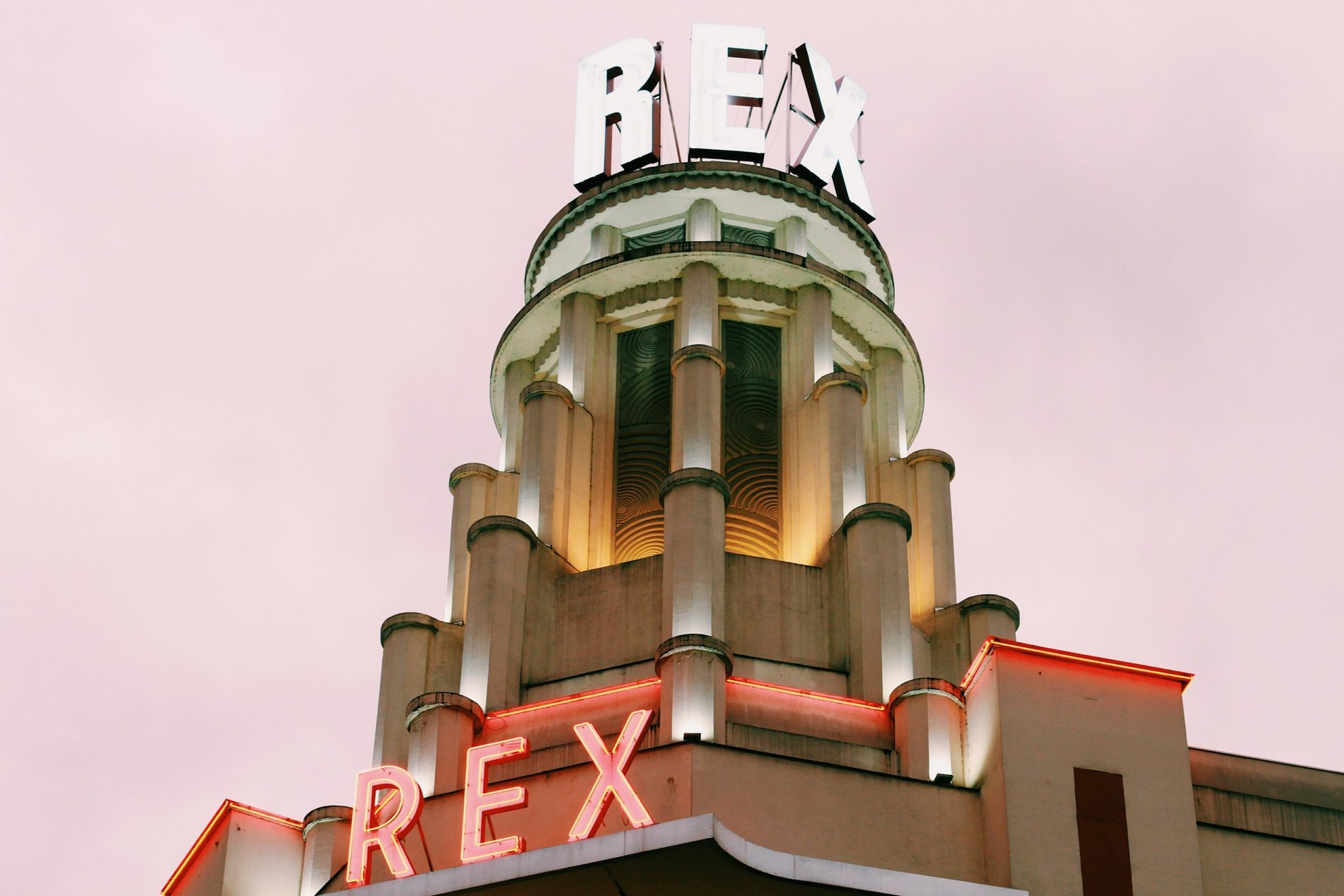
On Rue de Clichy, the Casino de Paris hosts concerts in a hall that has seen Mistinguett and Joséphine Baker. On Place Édouard VII, the Théâtre Édouard VII offers a varied program, from comedy to contemporary plays. Boulevard des Capucines adds the Olympia, a beloved Belle Époque music hall still central to the city's concert life. Then come the theaters of the Grands Boulevards, from musicals to vaudeville, and Le Grand Rex opposite, for a premiere in its art deco auditorium or an electro night at the Rex Club. Post-performance dinner is easy to find: this corner of Paris does not go to bed early.
Museums and exhibitions in the 9th arrondissement
STUDIOS AND COLLECTIONS
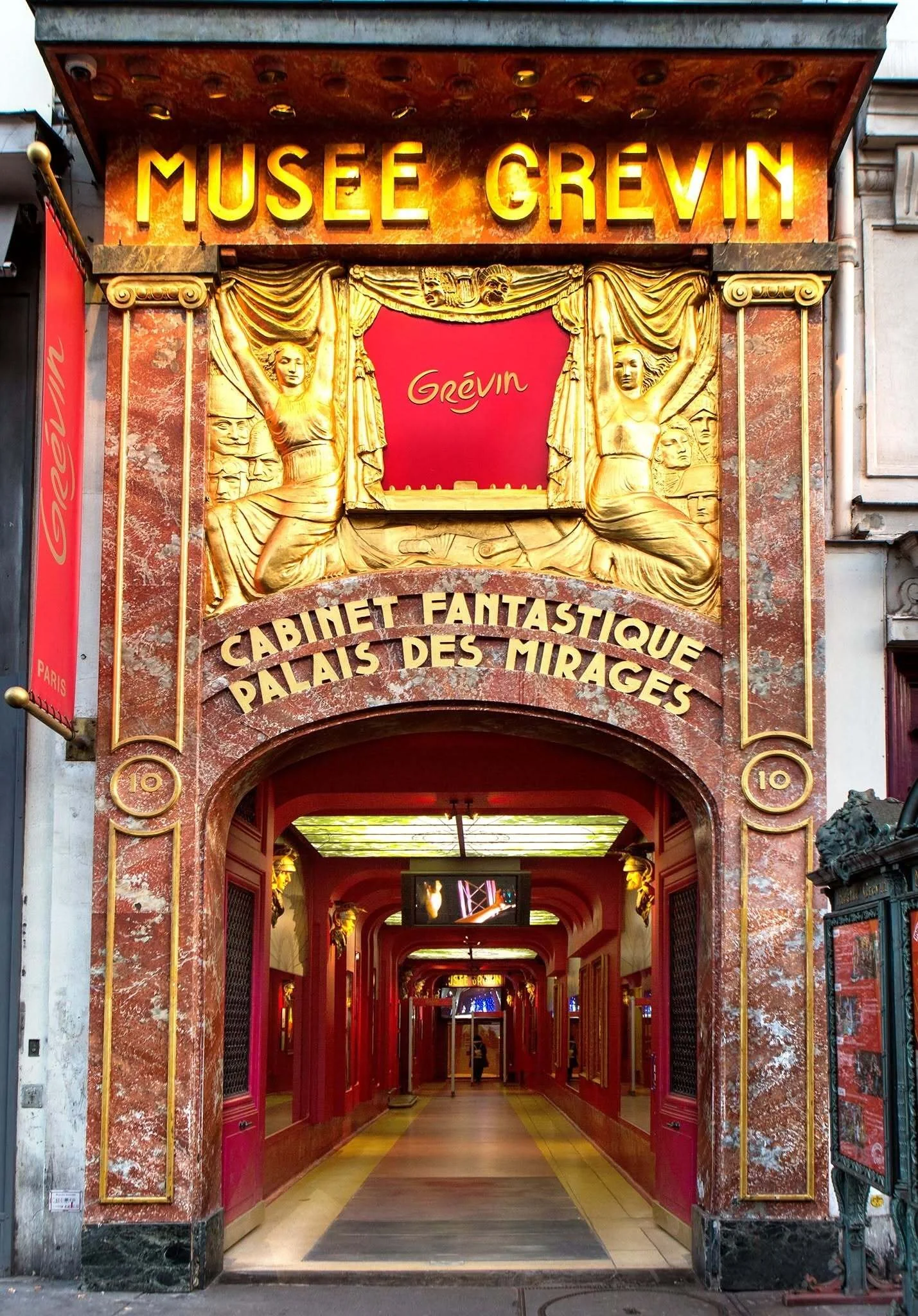
Three museums sum up the soul of the neighborhood. The Grévin wax museum, at 10 Boulevard Montmartre since 1882, lines up lifelike figures of celebrities and famous historical figures in theater sets, and still houses the Palais des Mirages, a mirrored room built for the 1900 World's Fair. It remains the most popular of the district's cultural activities, whatever your age.
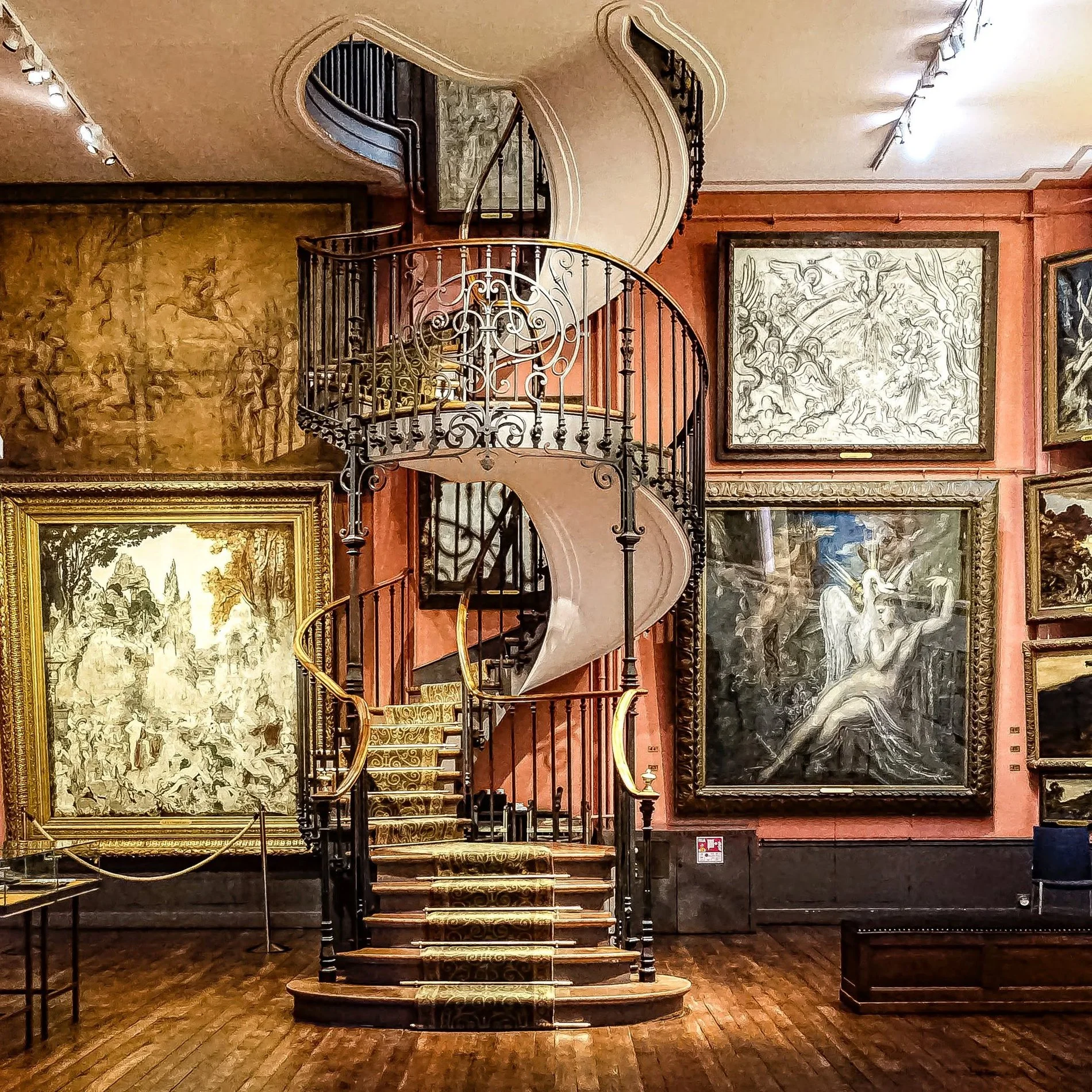
Higher up, at 14 Rue de La Rochefoucauld, the Musée Gustave Moreau occupies the house and studio of the Symbolist painter. A spectacular spiral staircase leads to thousands of drawings, watercolors and large canvases left in place by the artist, who designed the museum himself. Few buildings in Paris say so much about 19th-century art movements, or offer artistic experiences this personal.
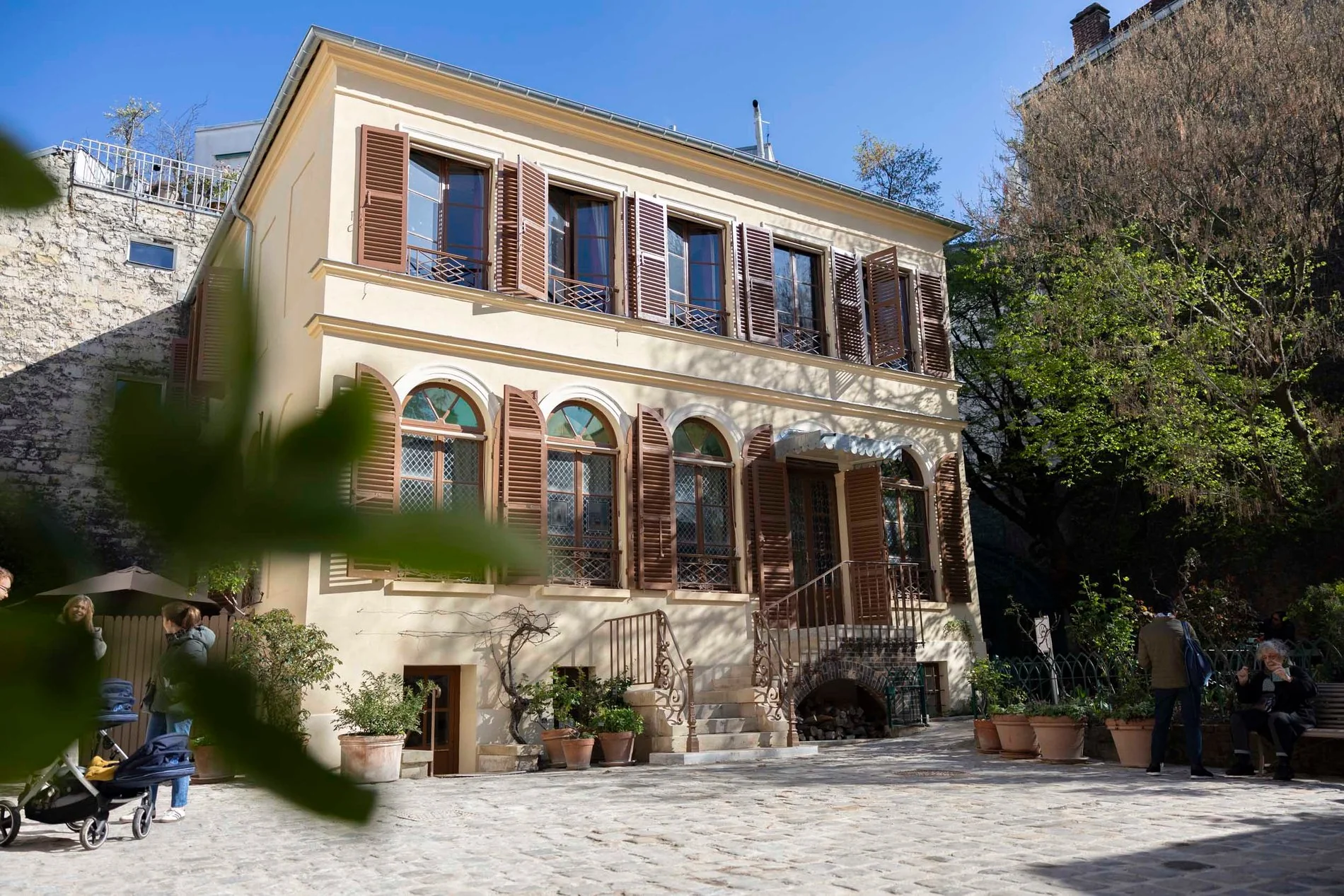
On Rue Chaptal, behind a discreet gate, the Musée de la Vie Romantique fills the former house of Ary Scheffer. Its rooms gather souvenirs of George Sand, including the cast of her right arm and Chopin's left hand, a piece of literary history of real historical significance. Entry to the permanent collection is free, temporary exhibitions are ticketed, and the garden is a relaxing spot for a coffee under the veranda. Nearby, the Hôtel Drouot auction house adds another layer of historical interest. One more notable event: every year, on the third weekend of September, European Heritage Days open buildings usually closed and add guided tours of the city's cultural heritage. The 2026 edition, the 43rd, runs on 19 and 20 September.
Unusual walks: covered passages and Pigalle
PASSAGES AND SIDE STREETS
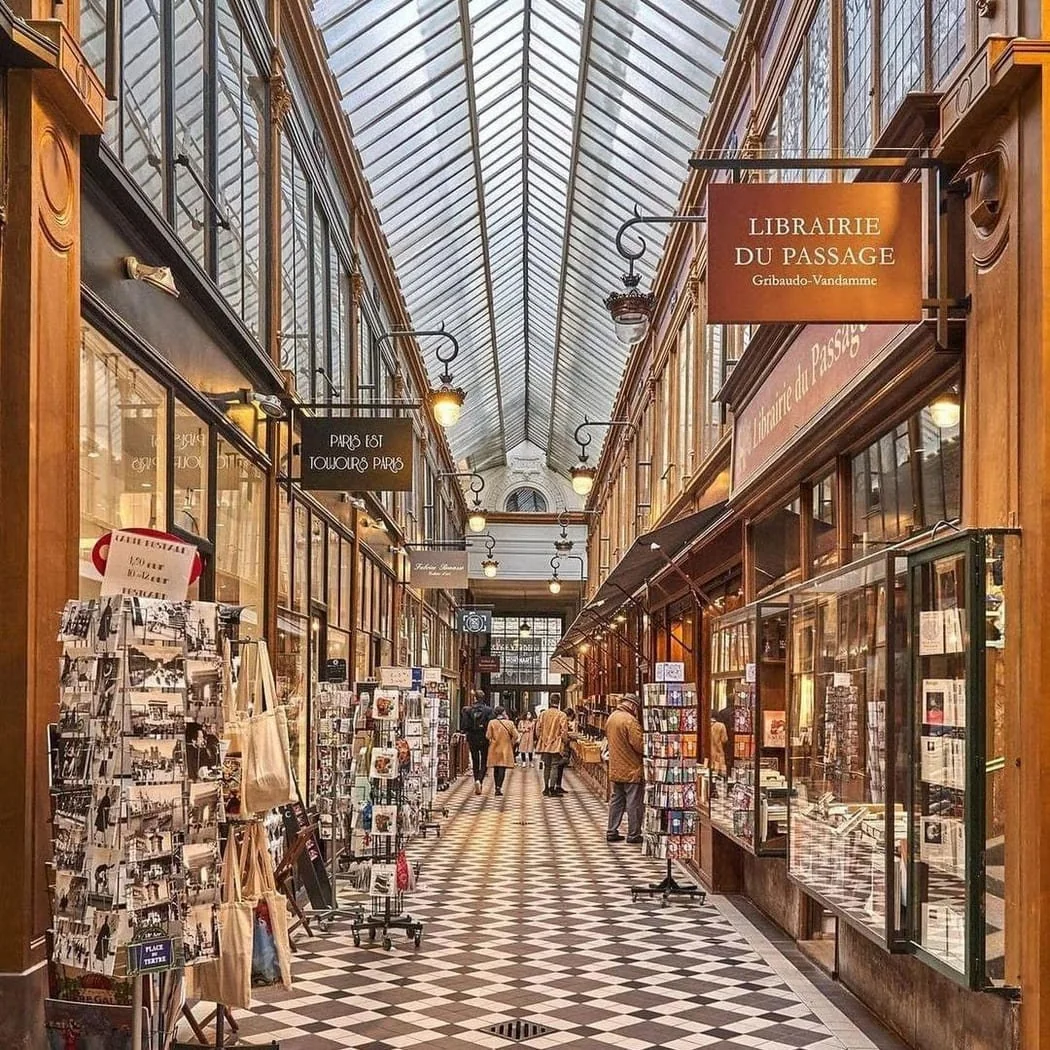
For a beautiful walk, push open the door of Passage Jouffroy, opened in 1845: glass roof, mosaic floor, antique bookshops, a walking-stick boutique and the entrance to the wax museum. It continues into Passage Verdeau, quieter, where print dealers and vintage booksellers have kept shop for decades. Opposite, Passage des Panoramas completes this route through the hidden passages of the capital, among the first lit by gas. These are the secret places Parisians love, and they are best seen early.
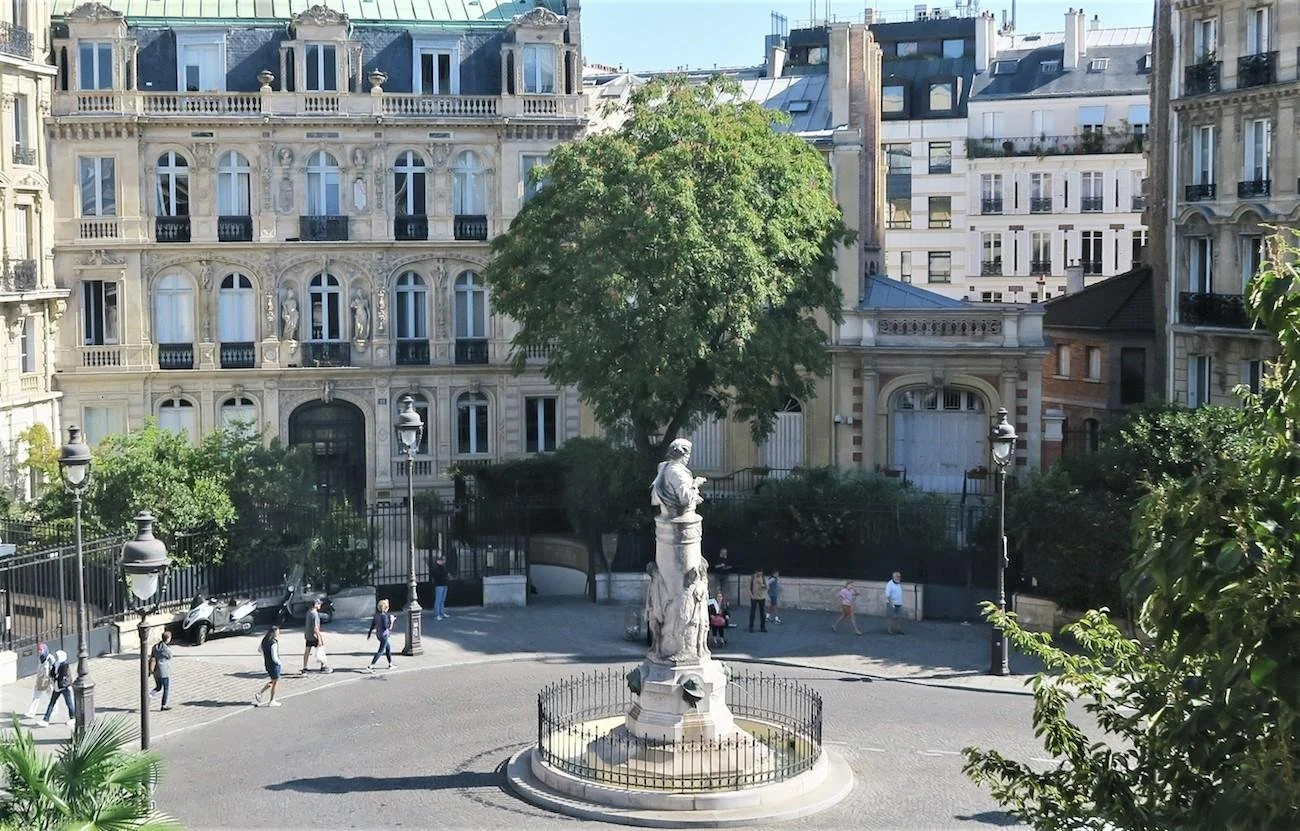
Head north and you reach Nouvelle Athènes, named after the artists and writers who settled here under the Restoration. On Place Saint-Georges, the fountain and curved façades make one of the prettiest squares in Paris. At 80 Rue Taitbout, walk into Square d'Orléans: this courtyard cité, built around its own fountain, was home to Chopin and George Sand, almost neighbors. Walking tours in Paris stop here for good reason, and the streets around it remain genuine hidden gems. South Pigalle, SoPi to locals, follows on with some of the liveliest bars in Paris.
Religious architecture holds its own surprises. Notre-Dame-de-Lorette, completed in 1836 under Louis-Philippe, gives its name to a whole quarter. Sainte-Trinité commands Place d'Estienne-d'Orves with its neo-Renaissance silhouette. More unusual still, on Rue Sainte-Cécile, Saint-Eugène-Sainte-Cécile was one of the first churches in France built entirely of cast iron, a metal frame you would never expect under neo-Gothic vaults. On Rue de la Victoire, the Grande Synagogue de Paris, inaugurated in 1874, is the largest building of its kind in the city, and the Haussmann-era façades around it repay a slow look.
department stores and where to eat
UNDER THE GLASS DOME
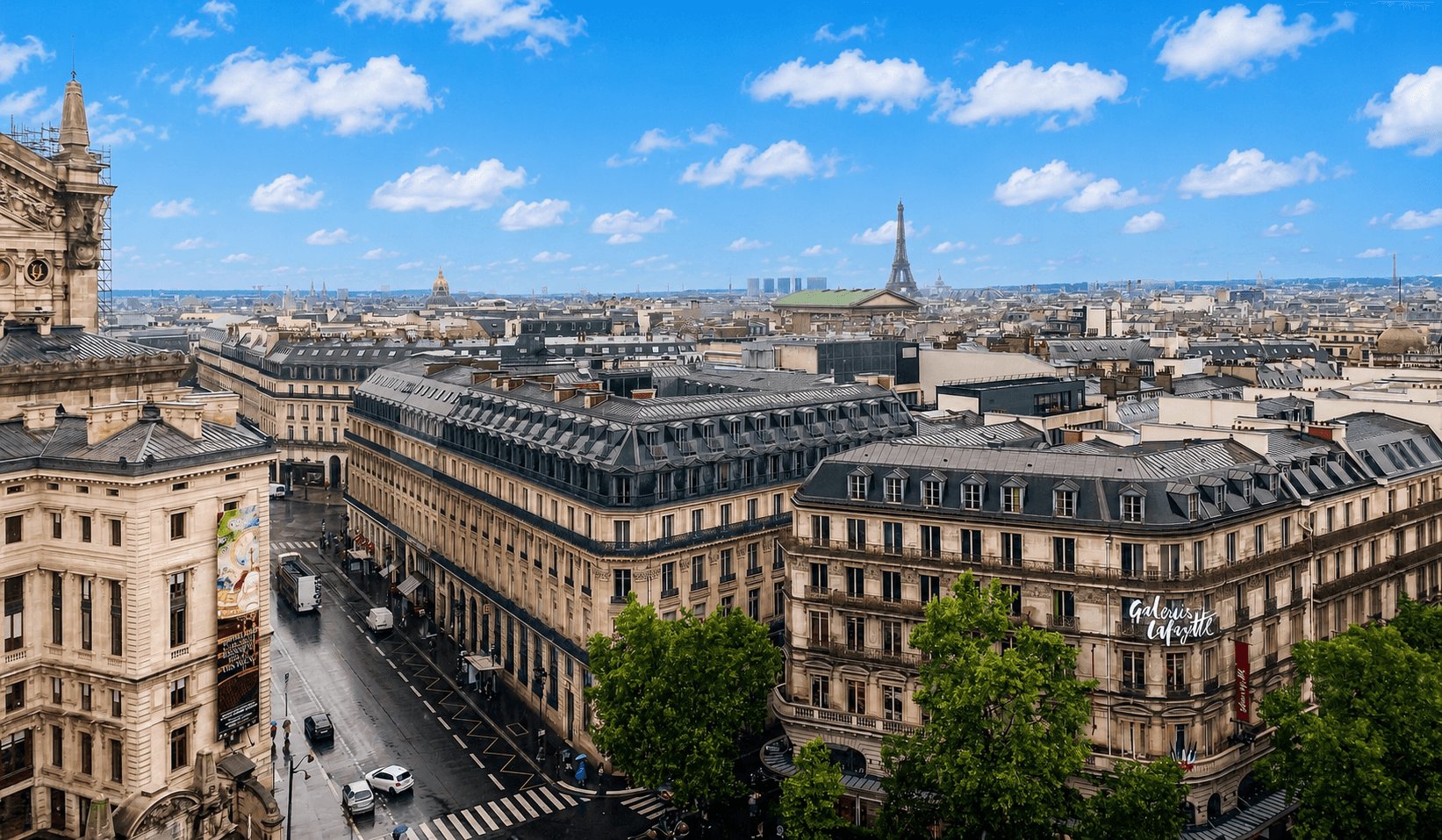
Boulevard Haussmann concentrates Parisian shopping. Under the Galeries Lafayette dome, your eyes travel up before following the floors back down; the rooftop terrace is free, and the view takes in the Paris roofs, the Opéra Garnier and the Eiffel Tower. Printemps, next door, brings together fashion stores and beauty halls beneath its art nouveau dome. Between them, Galeries Lafayette and Printemps cover the big shopping experiences, while the small boutiques of the side streets handle souvenir shopping and unique finds.
Food goes well beyond the big names. On Rue du Faubourg-Montmartre, Bouillon Chartier has served popular traditional French cuisine since 1896 in a listed dining room where waiters still write the order on the paper tablecloth: a classic worth putting on your list. Just beyond the northern edge of the district, Bouillon Pigalle serves the same idea to a younger crowd. À la Mère de Famille, founded in 1761, sells chocolates and gift boxes of local delicacies. Rue des Martyrs reads like a village high street, with cheese shops, bakeries and famous cafés, and Lactem is the neighborhood favorite for a coffee shop break. For dinner, eat at Pink Mamma for a busy trattoria night or book the bistro Le Pantruche for local cuisine done quietly. Add the Anvers local market and the wine bars of SoPi, and this arrondissement offers a variety of food experiences, from gourmet dining to delicious meals eaten elbow to elbow, without ever leaving its own streets.
Where to stay in the 9th arrondissement at Hôtel Maxim Folies
WHERE TO DROP YOUR BAGS
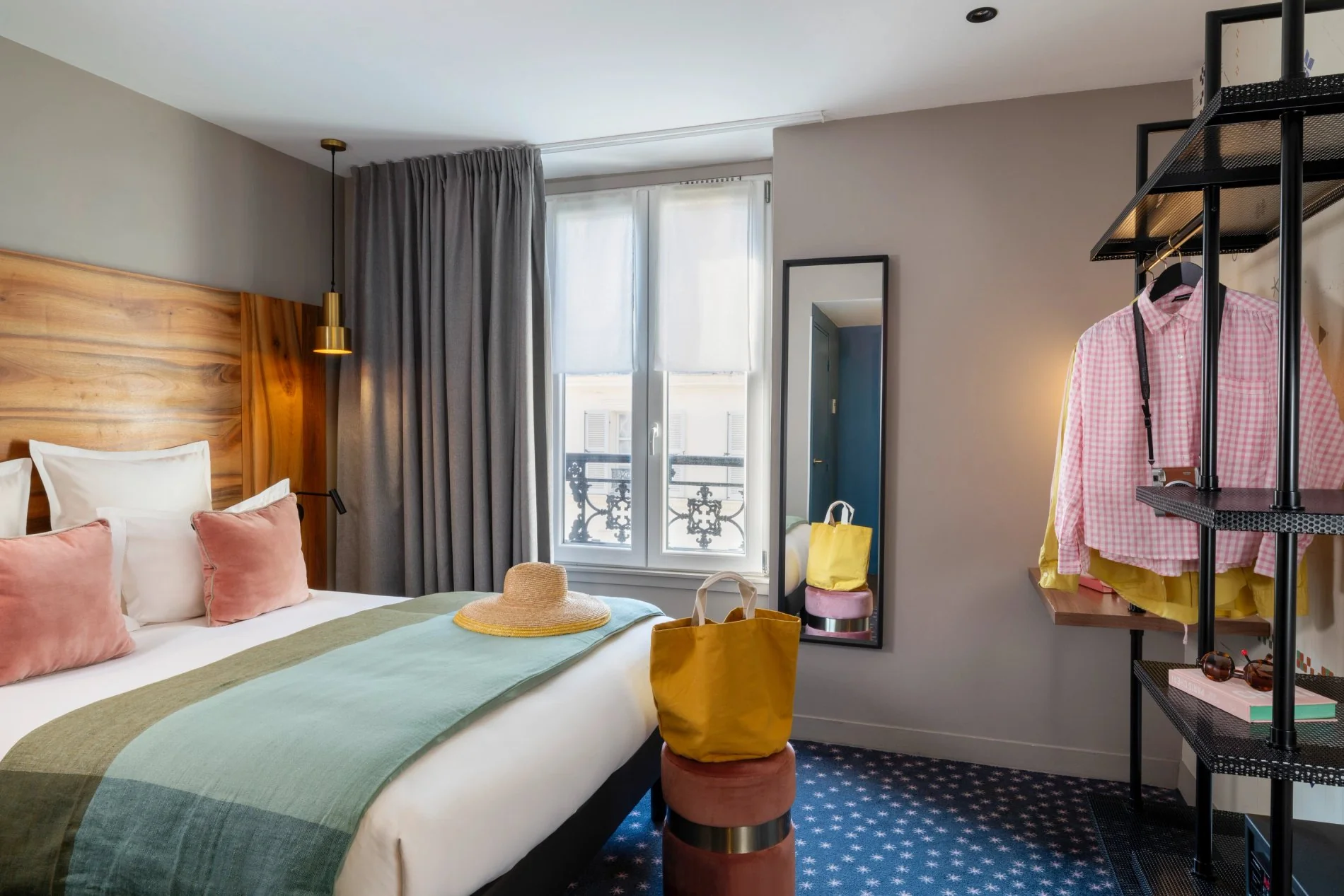
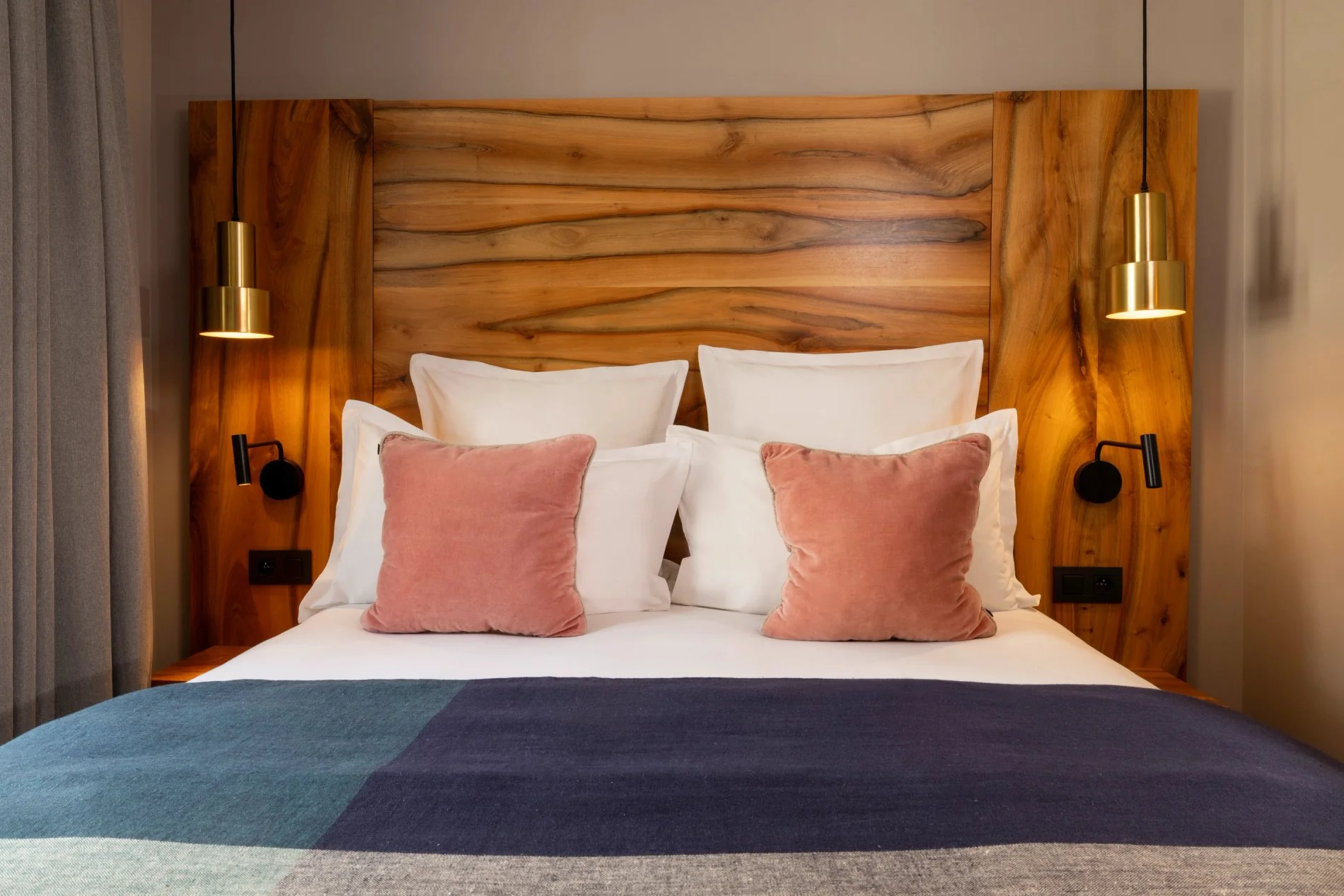
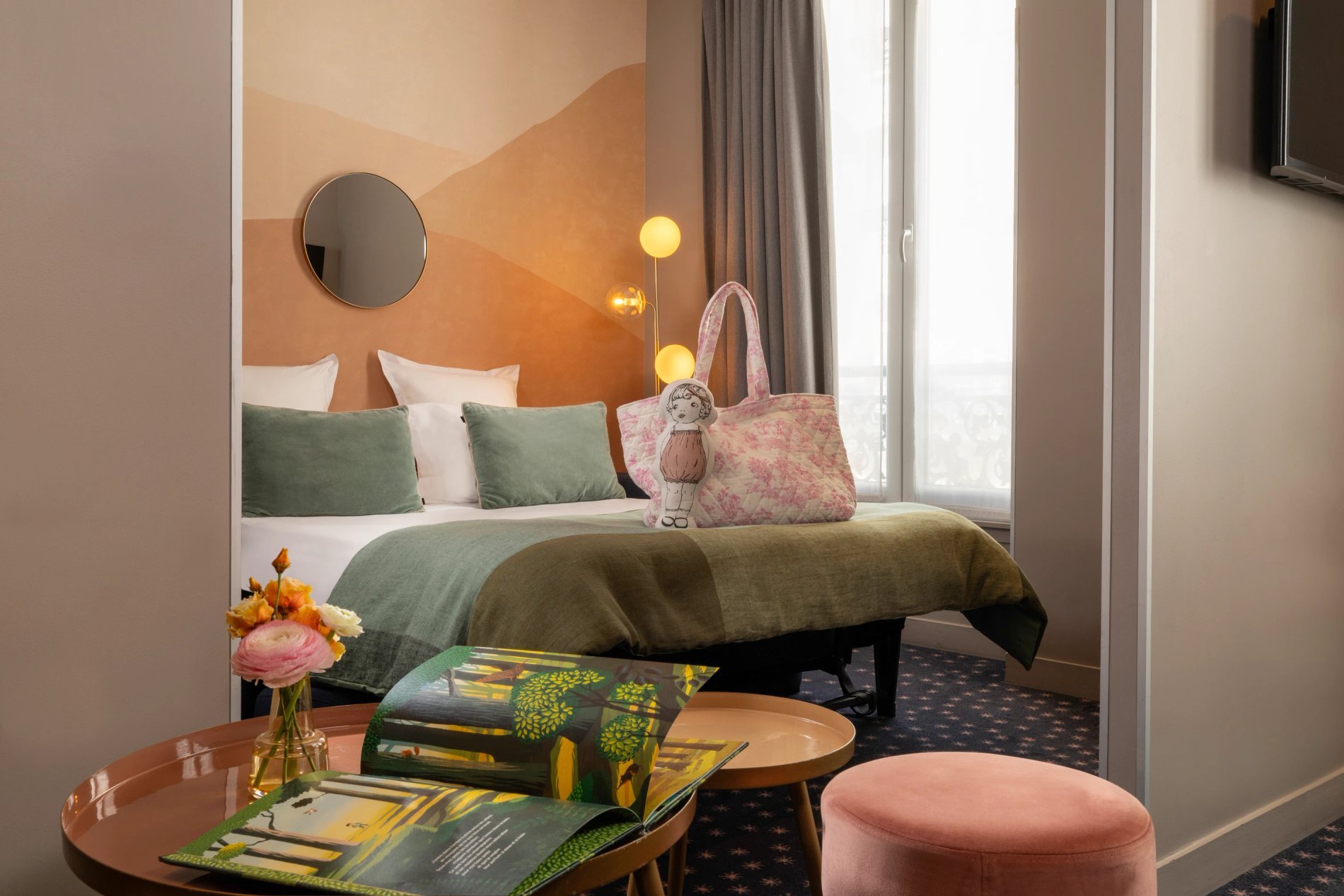
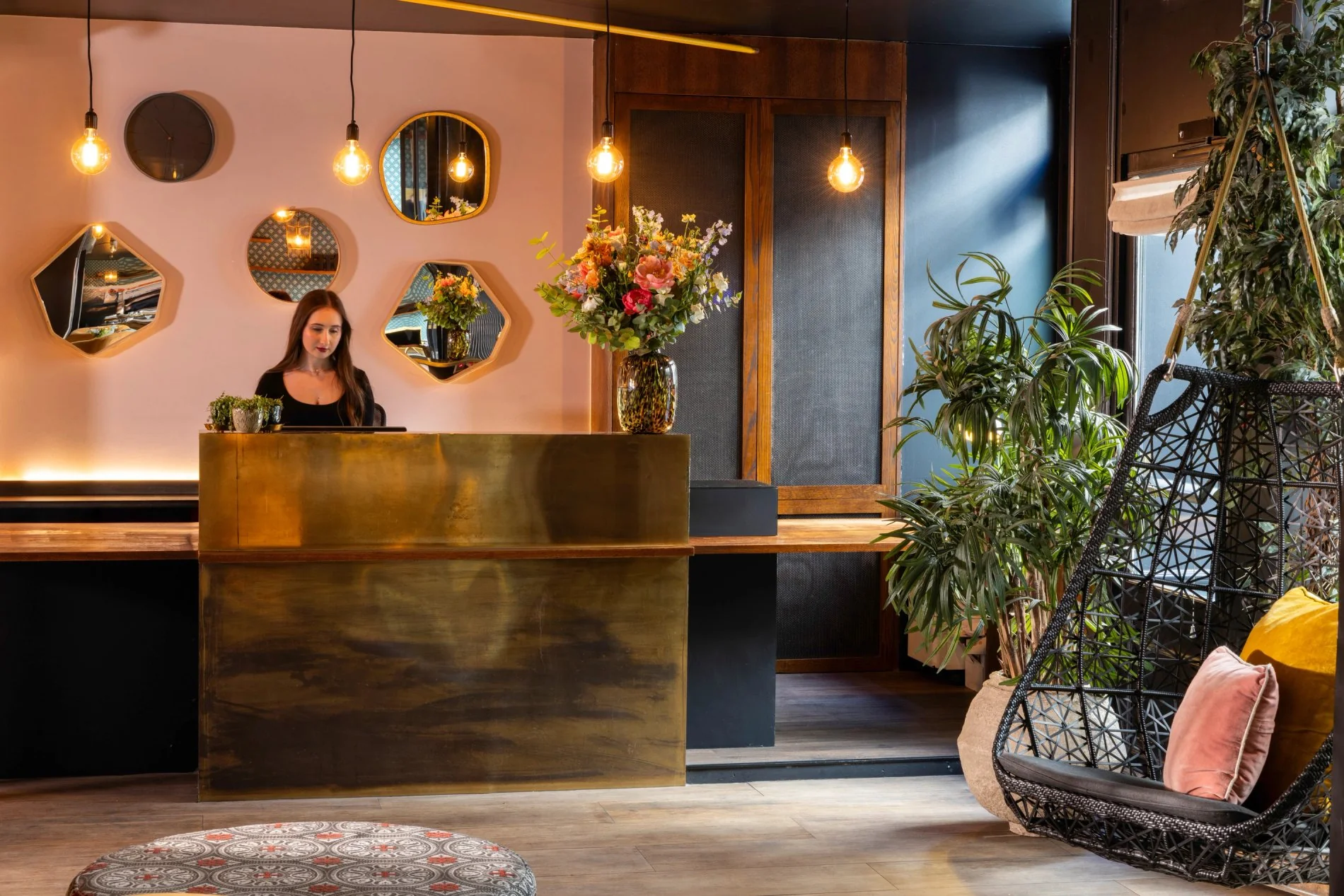
Choosing your hotel in the center of this district changes everything: a few steps from the Folies Bergères, Hôtel Maxim Folies puts every visit within walking distance, and few hotels in Paris sit this close to both the Grands Boulevards and Montmartre. This friendly 3-star Paris hotel has 38 rooms and junior suites where solid oak, industrial metal and brushed brass create a warm atmosphere and an unmistakably Parisian design.
The Classic Room (13 sqm) covers the essentials for a short break. The Superior Room (14 sqm) adds a city view. The Deluxe Room (15 sqm) offers a twinnable queen size bed and a coffee machine. The Junior Suite (25 sqm) sleeps up to four with its sofa bed, desk and Eames chair. The Adjoining Rooms (26 sqm) suit stays with family or friends while keeping everyone's privacy. L'Occitane en Provence products, air conditioning, safe, kettle and Valpas certification against bed bugs complete the equipment, and the romantic offer, with champagne and macarons prepared in the room, suits a honeymoon or an anniversary.
Services and transport to explore the neighborhood
TAILORED COMMON SENSE
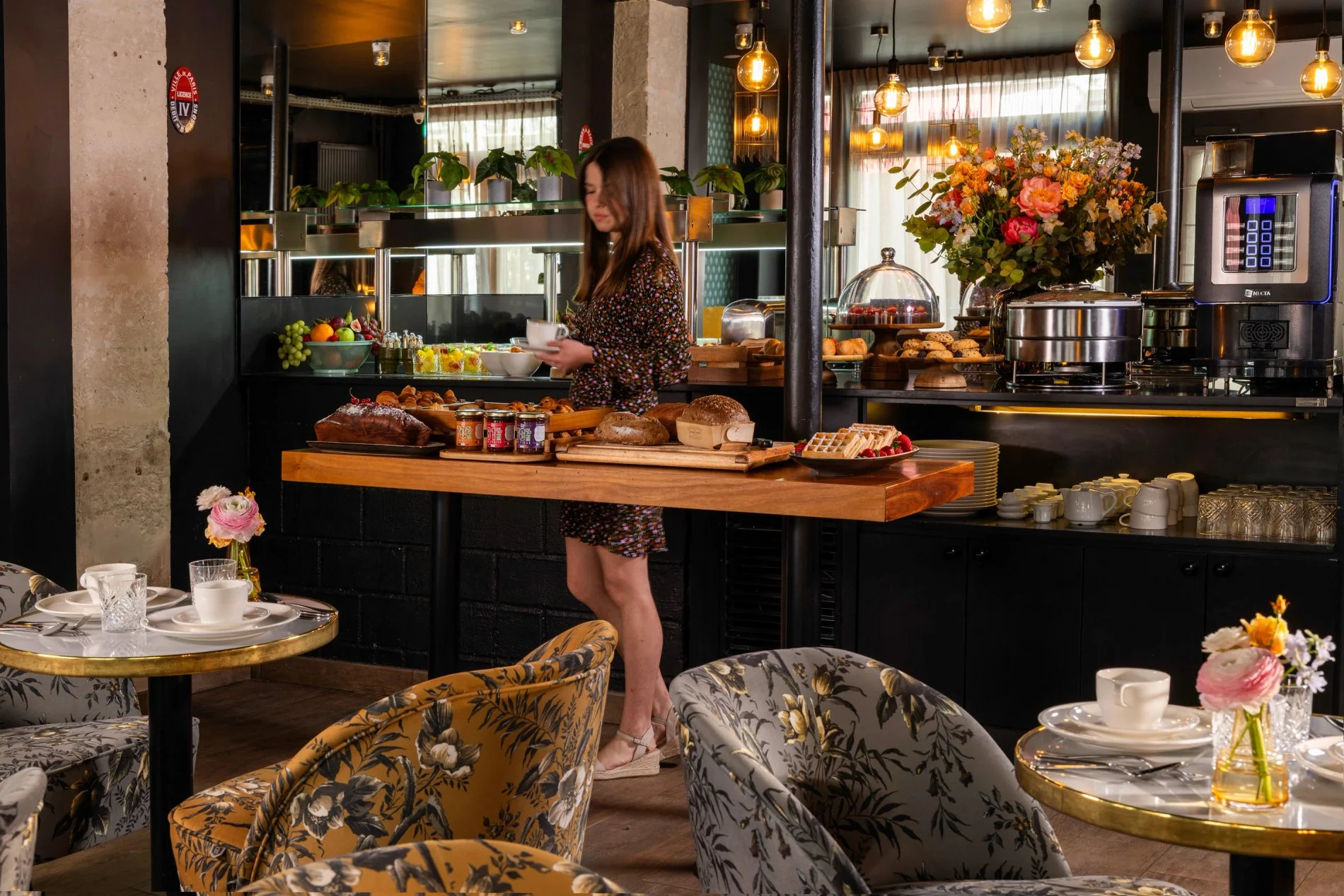
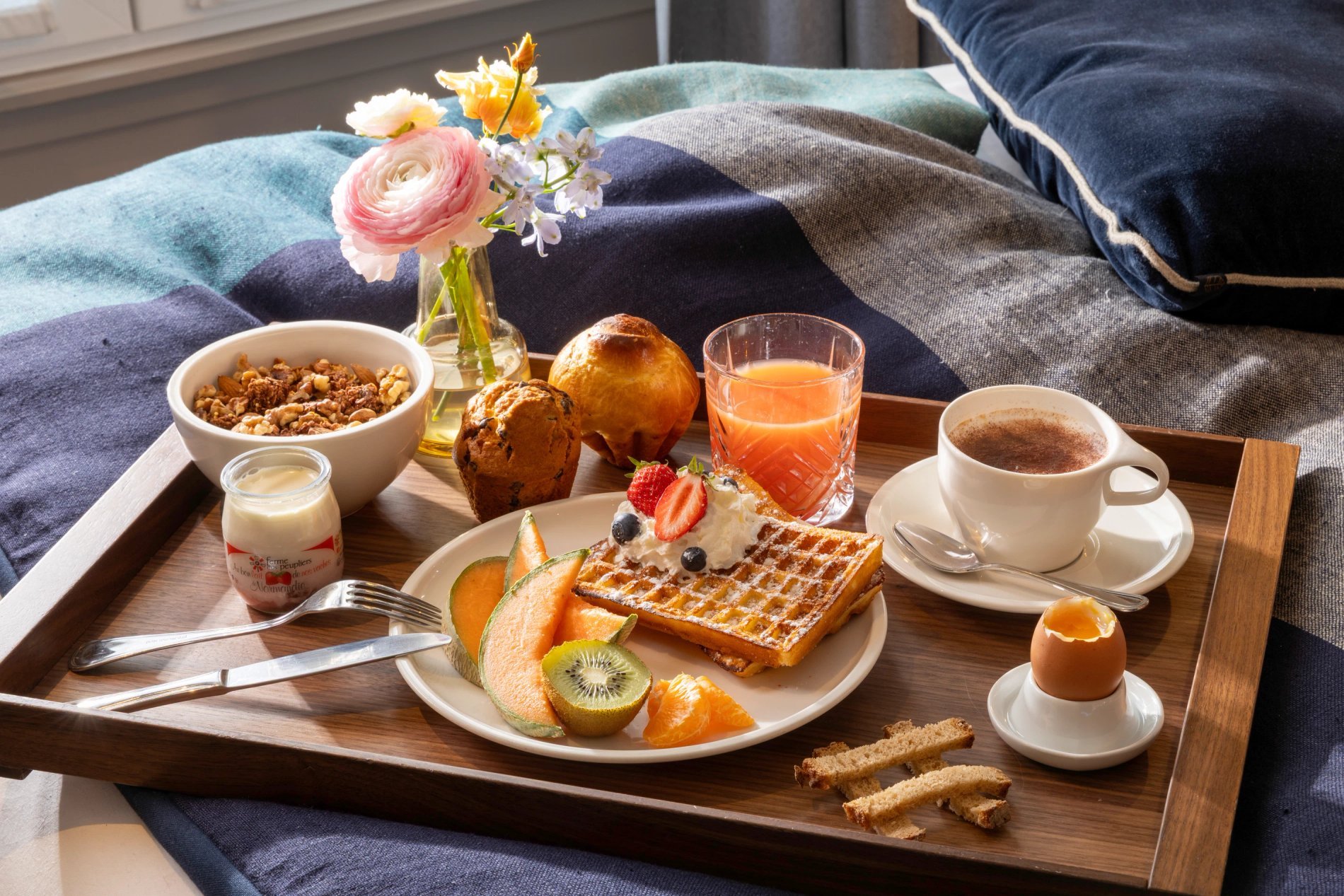
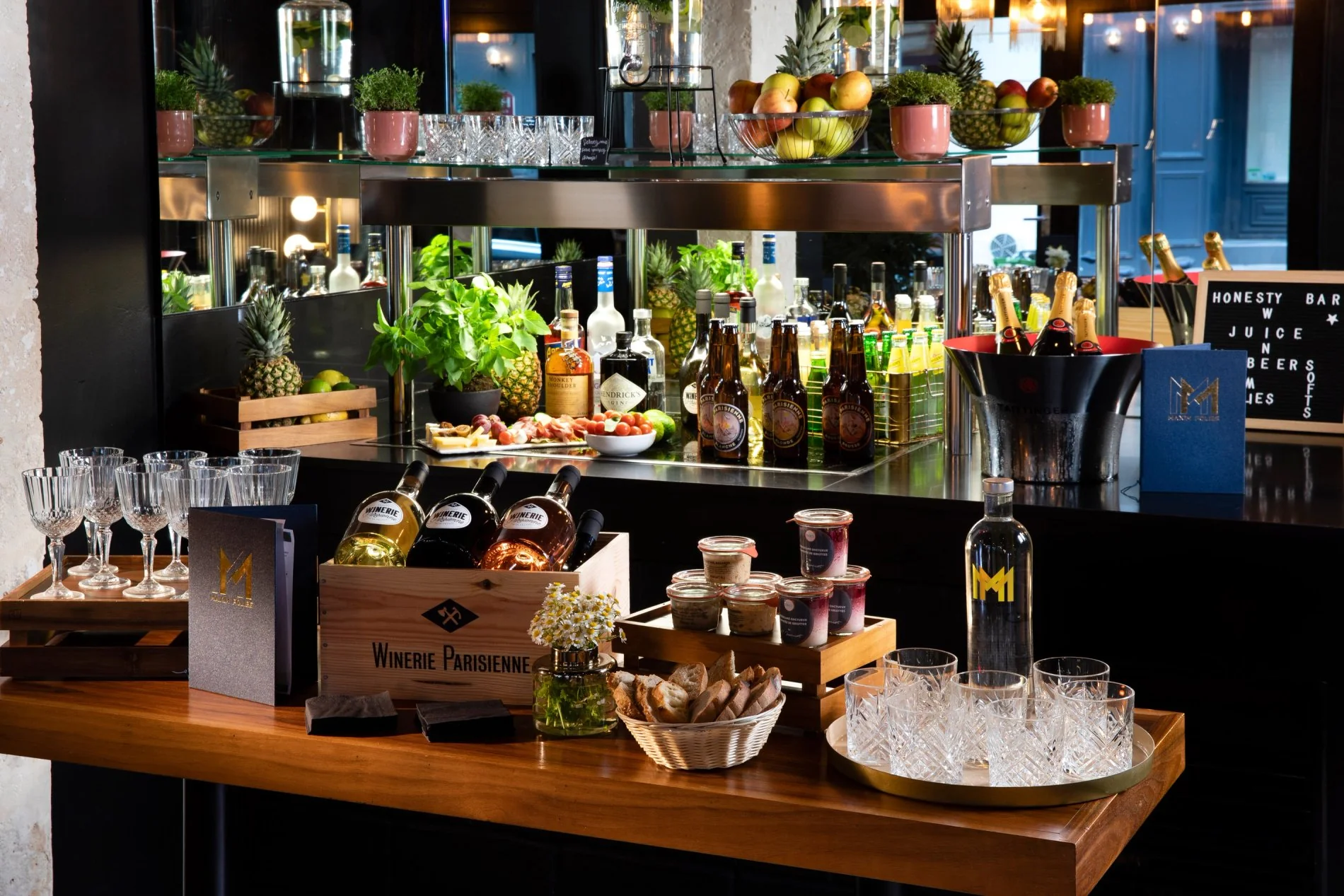
A reception open 24 hours makes coming and going easy: check-in from 3:00 PM, check-out at 12:00 PM, luggage storage, laundry, transport booking and a pet-friendly welcome. The concierge team knows the rhythms of the city by heart and will handle a restaurant reservation, a route suggestion, a show idea or a guided bike tour of Paris with our partner Holland Bikes. Breakfast is served as a buffet from 7:00 AM to 11:00 AM, sweet and savory, with produce sourced close by. The Honesty Bar, self-service from 5:00 PM to 11:00 PM, suits quiet ends of the day, and room service takes over from 12:00 PM to 11:30 PM with its own menu. Everyday practicalities are close too, from the post office to the pharmacy, and the bank head offices of Boulevard des Italiens are a five-minute walk for anyone here on business.
The Grands Boulevards metro station (lines 8 and 9) is a few steps away: line 9 runs direct to Gare Saint-Lazare, line 8 to Place de la Concorde and Bastille. Cadet station (line 7) also serves Gare du Nord, Gare de l'Est, the department stores and the RER B to Paris CDG airport. Buses 20, 32, 39, 74 and 85 pass the Musée Grévin, the Louvre Museum and the Marais. By bike, the Vélib' station Geoffroy-Marie is right outside the hotel. By car, the Belib' charging points on Rue du Conservatoire and the Interparking garage on Rue Chauchat are under five minutes away.
Book your stay in the heart of Paris 9 at Hôtel Maxim Folies
BEST PRICE GUARANTEED
A district where you move without transition from a painter's house-museum to a department store dome, from a charming covered passage to a theater auditorium. What to do in the 9th arrondissement of Paris? Far more than one day allows: emblematic monuments, famous cultural attractions, activities for the family, notable events and the kind of unique experiences you only find on foot.
Next door to the Folies Bergères, Hôtel Maxim Folies is the essential starting point for this Parisian experience, with a team that guides you towards its favorite addresses and a concierge ready to book your outings.
FAQ - Frequently asked questions about the 9th arrondissement of Paris
Don’t miss a beat
What to do in the 9th arrondissement of Paris in one day?
Start with the covered passages and the Grévin wax museum, continue with the department stores of Boulevard Haussmann and the Galeries Lafayette rooftop terrace, then climb towards the Musée de la Vie Romantique. End the evening with a performance at the Folies Bergères or the Palais Garnier.
Which museums should you visit in the 9th arrondissement?
Three museums stand out: the Musée Grévin and its wax figures, the Musée Gustave Moreau, house and studio of the Symbolist painter with its spiral staircase, and the Musée de la Vie Romantique, devoted to George Sand, whose permanent collection is free to enter.
Where can you walk in the 9th arrondissement of Paris?
Passage Jouffroy and Passage Verdeau for the covered passages, Place Saint-Georges and Square d'Orléans for Nouvelle Athènes, Rue des Martyrs for its cheese shops and bakeries, Boulevard de Rochechouart to reach Montmartre. Square Montholon offers a shaded pause under its plane trees.
What to do in the 9th arrondissement of Paris with family?
The Musée Grévin and its Palais des Mirages appeal to children, as does the panoramic terrace at Galeries Lafayette. Square Montholon has playgrounds and picnic spots. At Hôtel Maxim Folies, the adjoining rooms and junior suites sleep up to four people.
When is the best time to visit the neighborhood?
Mornings for the covered passages and the museums, still quiet. Late afternoon for the terraces of the Grands Boulevards. Evenings for the theaters, the bars and the wine lists of South Pigalle. In September, European Heritage Days open places usually closed, free of charge.
How do you book at Hôtel Maxim Folies?
Book on our official website for the best available rate: you can check prices, see availability, view more photos of the rooms and discover our offers, including breakfast at a reduced rate. Reception also answers 24 hours a day.